
Food-Led Travel Is a Sales Tool, Not Just a Theme
A hotel sends a tour operator photographs of its chef shopping at a market. A tourism board presents a destination through vineyards, fishing boats and long lunches. A DMC promises access to local food culture. The buyer likes all three, but still cannot put any of them into a costing. There is no departure time, no clear inclusion, no trade rate and no answer to what happens when the market is closed.
That is the gap between a culinary theme and a food travel product. Food can give an itinerary character, make a hotel stay more distinctive and provide an agent with a convincing reason to recommend one trip over another. But appetite is not availability, and a compelling photograph does not create a contract.
The commercial argument is straightforward: food experiences become useful to the travel trade when someone has done the less photogenic work of defining, pricing and operating them. Suppliers should not abandon the storytelling. They should give buyers something dependable to sell underneath it.
You’ll find on this page
- A culinary story is not yet a product
- Make the margin as clear as the menu
- Logistics are part of the guest experience
- Dietary requirements need boundaries, not cheerful promises
- Give the experience a job in the itinerary
- Equip the buyer to sell it without calling you
- Start with one product the trade can trust
- Frequently asked questions
A culinary story is not yet a product
Consider the difference between a destination known for its seafood and an afternoon that a buyer can actually reserve: harbour collection, a guided visit to a working fish market, a cooking session and lunch, with a fixed finish time and a clearly stated transport arrangement. The first creates interest. The second can occupy a place in an itinerary and a line in a booking system.
A product needs boundaries. Who is it for? What does the guest do rather than simply observe? How long does it take, what is included and what level of physical effort is involved? A walking tasting tour with several standing stops is not interchangeable with a seated lunch, even if both are described as an introduction to local cuisine.
Those distinctions help product managers match an experience to the right customers. They also protect against disappointment. A confident home cook may want hands-on preparation; a couple on a short city break may prefer conversation and tasting without spending an afternoon at a workbench. Neither is the better customer, but they need different products.
This is part of the wider problem of excellent local tours failing to win trade contracts: quality on the ground does not automatically translate into something a buyer can distribute.
The useful starting point is one specific, repeatable experience, not a destination-wide declaration about gastronomy. Give it a clear name, a defined customer and a precise promise. Broader culinary positioning becomes more credible when the trade can point to actual departures beneath it.
Make the margin as clear as the menu
Calling an experience commissionable is not enough. The buyer needs to understand how the commercial arrangement works. Is there a gross selling price with an agreed commission, or a confidential net rate from which the operator constructs its selling price? Which taxes and charges are included? Are transfers, drinks, ingredients and service charges inside the quoted price or payable separately?
Food experiences can become awkward to cost because their components follow different rules. A guide may charge per departure, a kitchen per session and a producer per guest. That is the supplier’s assembly problem, not something every prospective operator should have to reconstruct. Present a coherent trade offer with the pricing basis and any minimum charge clearly stated.
For example, a private cooking session may work commercially for a family but be expensive for a couple because the chef and venue costs barely change. Show the buyer the relevant occupancy or group-size pricing. Do not advertise an attractive per-person rate that only applies to a group size the target customer rarely reaches.
The agreement should also explain validity, payment deadlines, cancellation terms and the treatment of changes. If a guest drops out, does the remaining party move into a different price band? If ingredient costs change, when can rates be reviewed? Buyers need a stable basis for quotations, not a promise that the final amount will probably be similar.
Commissionable travel packages need enough commercial room for their intended distribution chain. A product priced solely around direct consumer sales may need redesign before it can support an operator and a retail agent. Adding a trade label does not solve that arithmetic.
Logistics are part of the guest experience
A memorable lunch can still be a poor itinerary component if it regularly finishes too late for the next transfer. Food tourism logistics are not administrative detail added after the creative work. They determine whether the experience can be sold alongside flights, excursions, hotel changes and other commitments.
Start with the full guest journey. Specify the meeting point, collection area, expected walking, transport arrangements, toilet access and finish location. Explain whether the advertised duration includes travel. An agent should not have to discover after booking that a rural kitchen requires a separate transfer from the city.
Operating dates deserve particular attention. Markets have closing days. Producers may restrict visits during busy production periods. Religious observance and public holidays can affect service. Seasonal ingredients can improve an experience, but the supplier must distinguish a normal menu variation from the loss of its central attraction.
Contingencies should preserve the reason someone booked. If a boat landing is cancelled, a generic restaurant lunch may not be a reasonable replacement for an experience sold around meeting fishers and understanding the catch. Define the substitute, the customer’s options and who authorises any change before a departure goes wrong.
There should also be a named operational contact and a practical escalation route. A guide running late cannot wait for a hotel sales manager to return from a trade show. Buyers want to know who can make decisions while guests are travelling.
This is where reassurance becomes as important as destination inspiration. A buyer does not need every operational document in the first email, but they need confidence that the answers exist and will remain consistent after contracting.
Dietary requirements need boundaries, not cheerful promises
Food-led travel makes dietary suitability central to the purchase. A vague assurance that all requirements can be accommodated is therefore a commercial risk, particularly where experiences involve small kitchens, shared equipment or several independent tasting stops. Flexibility is useful; unsupported certainty is not.
Suppliers should distinguish preferences, religious requirements, intolerances and allergies rather than treating them as one field on a booking form. The operational questions differ. A vegetarian alternative may be straightforward, while a request involving allergen cross-contact requires a specific assessment of the kitchen and handling practices.
Set out what information must be collected, by when and who confirms acceptance. If suitability depends on a producer or venue, the DMC should obtain that confirmation rather than passing an unverified request down the chain. The guest’s requirement is not confirmed simply because an agent has entered it in the reservation notes.
Equally, explain when adaptation changes the experience materially. A tasting built around cheese may offer an excellent non-dairy alternative, or it may lose its central purpose. The honest answer might be to recommend another product. That is better selling than accepting a booking the operation cannot satisfy.
Accessibility deserves the same specificity. Describe steps, surfaces, seating and the actual kitchen layout rather than relying on a broad accessibility label. Clarify age restrictions, alcohol-free options and whether children participate or accompany adults.
These details should inform product design, not merely appear as exclusions at the bottom of a contract. A seated alternative or a carefully developed alcohol-free version can broaden the audience. The key is to sell those versions on their own merits, with clear limits, rather than improvising them after payment.
Give the experience a job in the itinerary
Not every food product needs to become the headline reason to travel. Some are more valuable as a first-evening introduction, a way to connect two destinations or a reason to extend a stay. Suppliers often weaken their pitch by presenting every tasting as an unmissable centrepiece instead of explaining where it fits.
A hotel, for example, might offer a hosted regional supper on arrival. Its value to an operator could be that guests avoid another transfer after a long journey while still experiencing something distinctive. The sales case is not simply that the food is excellent; it is that the product improves the first night without adding operational friction.
A DMC could place a producer visit between two overnight stops, provided luggage, vehicle access and timings work. That can turn a functional transfer into a meaningful part of the holiday. But the experience needs a realistic departure window and clarity about whether guests eat enough to replace lunch.
Offer buyers a small number of well-defined uses. A shared departure may suit independent travellers, while a private version fits tailor-made holidays. A shorter format may work for touring groups. These should be genuine operating variants, not endless bespoke promises that force the reservations team to reprice every enquiry.
Tourism boards have a useful role here: helping local suppliers develop complementary products rather than promoting an undifferentiated collection of restaurants and tastings. The destination benefits when buyers can build a coherent programme.
Good pitching then becomes more selective. Show the product manager exactly which itinerary gap the experience fills, which customers it serves and what it replaces or improves. That is a stronger proposition than asking them to add another excursion simply because it photographs well.
Equip the buyer to sell it without calling you
A buyer may understand the product perfectly after a supplier presentation. The retail agent who eventually sells it may never attend that presentation. The product therefore needs to survive handover through contracting, loading, training and customer quotation without losing either its appeal or its essential conditions.
Create a concise trade sheet backed by fuller operational information. The front page should explain the customer proposition, inclusions, duration, operating pattern, pricing basis and booking process. Supporting material can cover detailed access information, dietary procedures, cancellation rules and contingencies. Clear document dates and version control matter when seasonal arrangements change.
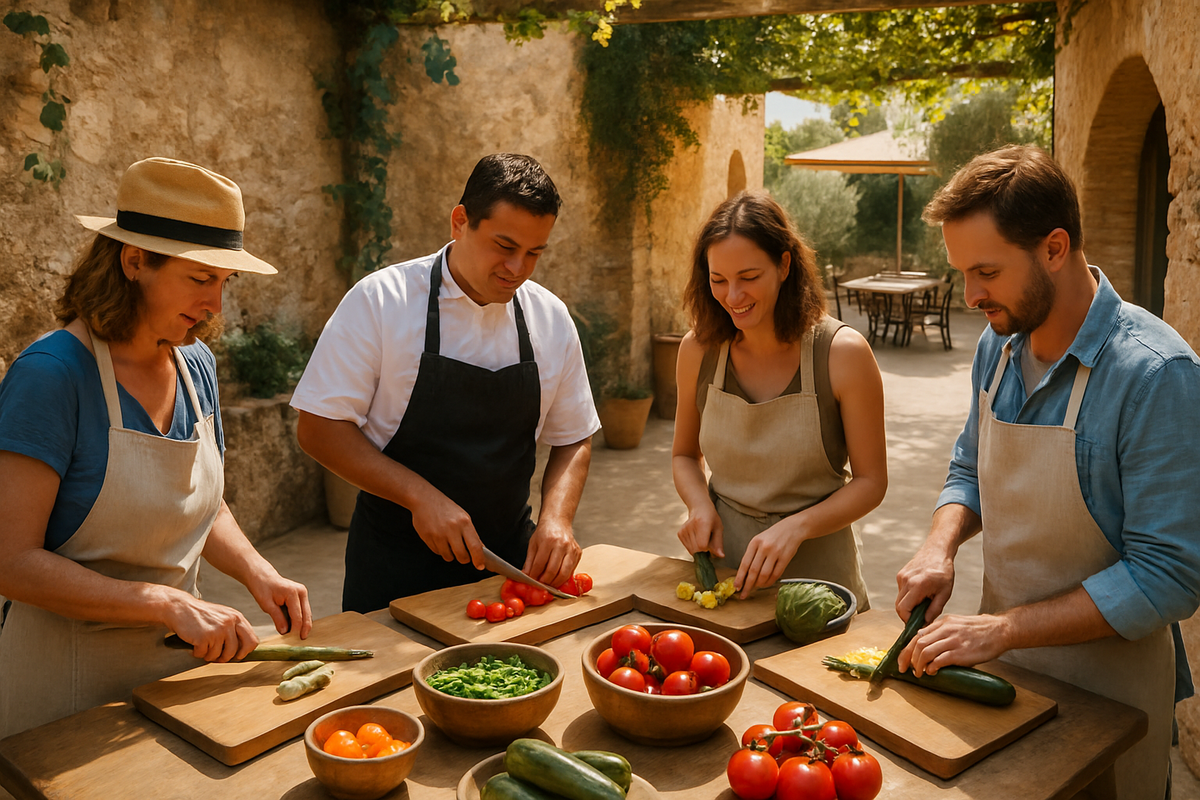
Photography should prove something as well as create desire. Show the actual setting, group format, level of participation and hosting style. A close-up of a finished dish tells an agent little about whether guests cook, watch a demonstration or simply eat. This is precisely the distinction between beautiful supplier assets and useful sales tools.
Booking instructions should be equally practical. State whether availability is live or on request, the response process, release periods and the information needed to confirm. A carefully managed on-request product can be credible; an unexplained silence cannot. Do not imply instant confirmation if several hosts must first agree.
When hosting buyers, demonstrate the saleable version. A specially arranged dinner with exceptional access may impress guests while teaching them little about the regular operation. A FAM trip should prove more than a destination’s beauty; it should let buyers test the timings, hosting and customer fit they will later promise.
Finally, record why enquiries fail. Price resistance, unsuitable departure days, slow confirmation and unclear dietary information require different fixes. Treating every lost enquiry as insufficient awareness sends the sales team back to promotion when the product itself needs attention.
Start with one product the trade can trust
The practical test is simple: could an unfamiliar product manager quote your experience accurately, explain it to an agent and book it without a chain of clarification emails? If not, more culinary storytelling is unlikely to remove the obstacle.
Begin with one food travel product and test the whole journey from enquiry to delivery. Establish its target customer, operating format, trade economics, dietary boundaries and contingency plan. Ask a buyer to review the information before investing in a larger collection. Where they hesitate, investigate whether the issue is the offer, the documentation or the operation.
Then run the product as sold. Compare the promised duration with the actual finish time. Check whether hosts receive guest requirements, whether transfers connect and whether the reservations process produces an unambiguous confirmation. A successful tasting is only one part of a successful trade booking.
For Globalisto, the useful sales question is not simply whether a destination has a good food story. It is whether suppliers have turned that story into something buyers can confidently distribute. Keep the evocative images and the human detail, but put a dependable commercial product behind them. Food becomes a sales tool when the trade can sell the experience without having to invent its missing parts.
Frequently asked questions
What makes a food experience ready for the travel trade?
It needs a defined format, customer proposition, operating schedule, pricing basis and booking process. Buyers also need clear inclusions, cancellation terms, dietary procedures and practical logistics before they can sell it confidently.
Should food experiences offer commission or net rates?
Either model can work, depending on the intended distribution relationship. State clearly whether the buyer earns commission on a gross price or receives a confidential net rate, and explain taxes, supplements and minimum charges.
Can small food producers work with tour operators?
Yes, provided the offer matches their real capacity and operating constraints. A DMC or other contracting partner can help coordinate bookings, transport and guest information, but responsibilities and commercial terms still need to be explicit.
How should suppliers handle dietary requirements on food tours?
Collect the relevant information before the booking deadline and obtain confirmation from the actual operator or venue. Distinguish preferences from allergies and other requirements, and never promise suitability that the kitchen or tasting stops cannot verify.
Does a food travel product need instant confirmation?
No, but an on-request product needs a clear response process and realistic booking conditions. Buyers must know when availability becomes confirmed and should not be encouraged to promise a departure before that point.