Local Culture Only Sells When Hotels Make It Bookable
A hotel tells an agent that guests can discover the destination through its people, flavours and traditions. The photography is excellent. The agent asks whether a couple arriving on Thursday can book the advertised market visit, what it costs and whether transport is included. The reply is that the concierge can arrange something once they arrive. At that point, a potential reason to choose the hotel becomes an uncertain recommendation for later.
This is the commercial gap in many hotel cultural experiences: the story exists, but the product does not. An agent cannot confidently include an unspecified encounter in a proposal, and a tour operator cannot build dependable departures around an activity that depends on whoever happens to be available.
The argument is not that every local encounter should become a rigid excursion. It is that hotels expecting culture to influence bookings must define enough of the experience for someone else to sell it. Authenticity and commercial clarity are not opposing objectives. Done properly, clarity protects the guest, the local host and the trade relationship.
You’ll find on this page
- Culture needs a place in the quotation, not just the brochure
- Define the promise before asking agents to sell it
- Make the economics work for the whole sales chain
- Protect the local relationship instead of staging authenticity
- Bookable means a dependable answer, not necessarily instant booking
- Give the trade evidence they can use in a sales conversation
- Start with one inclusion that reservations can deliver tomorrow
- Frequently asked questions
Culture needs a place in the quotation, not just the brochure
Culture in hotel marketing often sits at the level of atmosphere: neighbourhood stories, regional dishes, traditional design and promises of insider access. These can establish a sense of place. But the agent still has to translate that atmosphere into a recommendation against competing hotels, departure dates and holiday budgets.
A defined inclusion gives that recommendation substance. Consider a hypothetical coastal hotel offering a hosted visit to a working food market, followed by a cooking session using the morning’s purchases. The selling point is not simply that the hotel celebrates local cuisine. It is that guests can reserve a specific experience, understand what they will do and know how it fits into their stay.
This matters particularly when an agent is presenting a higher-priced option. A concrete inclusion provides a defensible explanation of value beyond room size or facilities. It does not guarantee the booking, but it gives the conversation somewhere useful to go. As with turning food-led travel into a sales tool, the commercial work lies in converting an appealing theme into a credible proposition.
Not everything needs an extra charge. A cultural experience might be included in a particular stay package, reserved for selected room categories or offered as a paid supplement. The essential distinction is whether the agent can identify the entitlement and secure it. An activity described as complimentary but impossible to reserve may have less sales value than a clearly priced, reliably confirmed alternative.
Define the promise before asking agents to sell it
An agent does not need a script for every moment of a cultural encounter. They need a stable promise. Who hosts it? Where does it start? How long does it last? What does the guest actually receive? Those questions should have agreed answers before the experience appears in a trade presentation.
A useful product specification covers the practical details that could otherwise become objections or complaints:
- Content: the activity, host, setting and included food, materials or admission.
- Operation: available days, start times, duration, capacity and minimum participation.
- Suitability: age restrictions, walking demands, accessibility information, languages and dietary arrangements.
- Booking: price basis, reservation deadline, confirmation process and cancellation terms.
- Disruption: arrangements for weather, host illness, seasonal closures or insufficient numbers.
Specificity prevents accidental exaggeration. A demonstration is not a hands-on workshop. A village visit is not necessarily a private invitation into a resident’s home. A tasting with hotel staff should not be presented as a meeting with the producer unless that producer actually participates.
The hotel also needs to distinguish fixed elements from variable ones. A food walk may always include a local guide and several tastings, while individual stops change according to trading hours and seasonality. That variation can be part of the experience, provided the description says so.
This is where promising activities often encounter the same obstacles as local tours that struggle to win trade contracts. Buyers may like the idea while finding the operational commitment too vague to accept. The answer is not more evocative copy. It is a specification that sales, reservations and delivery partners can all honour.
Make the economics work for the whole sales chain
A cultural experience can be attractively priced for a guest and commercially awkward for everyone selling it. Hotels need to decide whether they are supplying a commissionable retail extra, a net-rate component or an inclusion within a contracted package. Leaving that decision until an agent requests a quote creates avoidable negotiation.
The price basis matters as much as the amount. Is the charge per person, per booking or for exclusive use of the host? Does a private transfer cost the same for a couple and a family? If a workshop requires minimum attendance, who carries the cost when that threshold is not reached?
For example, a private craft session might be expensive for one couple but sensible for a small family sharing the host’s time. Publishing only a headline per-person price can obscure that structure. Equally, a low advertised price that excludes necessary transport may undermine trust when the full quote arrives.
Local partners must be part of the calculation from the beginning. Their fee should reflect preparation, hosting time, materials, group limits and any lost trading opportunity. The distribution model should be built around that agreed cost, rather than financed by pressing the host to absorb a discount later.
For UK operators packaging a stay, the practical question is whether the inclusion can be quoted with sufficient certainty in the selling currency and for the relevant travel period. Hotels should specify rate validity, applicable taxes, payment arrangements and how future changes will be handled. A charming experience with unstable commercial terms is difficult to put into a brochure or repeatable itinerary.
Protect the local relationship instead of staging authenticity
Making an experience bookable does not require making local people permanently available. In fact, a properly designed product should establish the limits that protect their working lives. A producer, artist or community host needs the right to set visiting days, group sizes, photography rules and areas that are not open to guests.
Hotels should begin with willing partners and an activity those partners want to offer. The wrong starting point is a marketing brief demanding something exclusive, traditional and photogenic, followed by a search for people prepared to perform it. That approach risks creating an experience designed around promotional imagery rather than a worthwhile exchange.
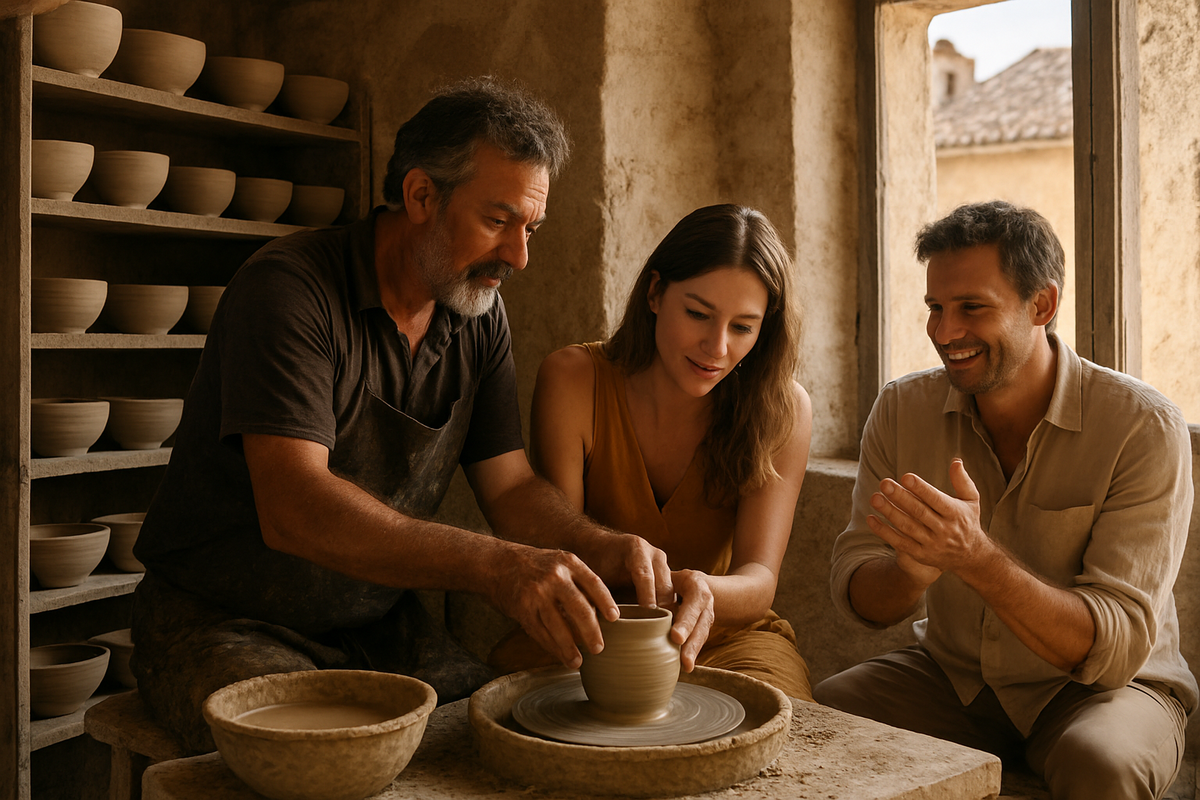
A working ceramics studio illustrates the distinction. Guests might book a small-group introduction led by a practising maker, handle appropriate materials and learn about the workshop’s current production. They should also understand whether firing and delivery are included, whether finished work can travel home and whether the session interrupts normal production. Those details improve both the proposition and the relationship.
Consent must extend to marketing. Hosts should approve how their work, identity and participation are described. Images should not imply access that has not been agreed, and culturally sensitive practices should not become guaranteed entertainment because they photograph well.
Hotels also need a candid answer to the exclusivity question. An experience does not become less valuable simply because local residents or guests from other properties can book it. Skilled hosting, appropriate access and dependable arrangements can justify the recommendation without a manufactured claim of privileged entry. Sell the quality of the encounter, not an inflated idea of ownership over local culture.
Bookable means a dependable answer, not necessarily instant booking
A booking button is useful, but it is not the definition of readiness. A modest hotel can sell an excellent cultural inclusion through a reservation request if availability is checked promptly, the response process is clear and the confirmation contains everything the agent needs. Conversely, an online listing is not truly dependable if each request triggers an improvised conversation with a local contact.
Start by assigning ownership. Someone must maintain availability, liaise with the host, confirm reservations and handle changes. The concierge may deliver part of the service, but the commercial promise cannot depend on one individual’s memory or personal messaging history.
Separate confirmed availability from requests. If places are held for hotel guests on certain departures, explain the release deadline. If every booking requires host approval, label it on request and state the expected response time. Agents can work with constraints; uncertainty disguised as confirmation is harder to manage.
Confirmation should cover the meeting point, timing, guest requirements, inclusions and a contact for problems on the day. Any voucher or itinerary wording should match the contracted product. Reservations staff must also know how to record dietary information or access requirements without promising adaptations the host cannot provide.
Disruption needs an agreed process rather than a vague promise to find something similar. If bad weather makes a harbour visit unsafe, does the guest receive an alternative, a refund or a choice? If a named host is central to the purchase, can a substitute genuinely fulfil the same promise? Define those decisions before selling. Reliability comes from making the exceptions manageable, not pretending they will never happen.
Give the trade evidence they can use in a sales conversation
Once the product works operationally, the sales materials should help an agent explain it quickly. Start with a short description that says what happens, why it belongs to this place and who will enjoy it. Then provide the practical specification separately, so an inspiring paragraph does not have to carry every condition.
A useful trade description might explain that guests join a neighbourhood cook to prepare a regional lunch using seasonal ingredients, with transfers and the shared meal included. It should not rely on phrases such as an unforgettable immersion in authentic living. Those words leave the agent doing the difficult work of establishing what is actually being sold.
Provide photographs of the real activity, with permission, rather than generic destination images that imply a different setting or level of access. Include an accurate sample running order and clear suitability notes. This is the distinction between beautiful supplier assets and useful sales tools: attractive content earns attention, but usable detail supports the quotation.
Training should rehearse buying situations. Can the experience suit a short stay? Is it appropriate for children? What happens if guests arrive late? Which clients would probably prefer another option? Honest exclusions help agents recommend with confidence and reduce mismatched expectations.
Familiarisation visits should test the same promise. Let agents experience the actual group format, transport and hosting arrangements, not an enhanced private version that ordinary guests cannot buy. A FAM trip that proves the product gives participants specific reasons to recommend it. The experience should survive the removal of the sales director and the special welcome.
Start with one inclusion that reservations can deliver tomorrow
A hotel does not need a catalogue of cultural extras to make progress. One well-designed experience can be a stronger trade proposition than a long list of loosely managed suggestions. Choose something rooted in the destination, supported by a willing host and realistic within the typical guest’s length of stay.
Before launch, ask someone outside the project to make a test enquiry. Give them an arrival date, a party composition and a practical requirement. Can they obtain a complete price and a clear availability answer without chasing several departments? Can they explain exactly what the guest will receive? Any gap exposed here belongs in the product design, not in the agent’s workload.
Then review commercial performance alongside delivery. Track enquiries, confirmed bookings, reasons for declining, cancellations and feedback from hosts as well as guests. Low uptake may signal poor visibility, unsuitable timing or an unclear price structure rather than lack of interest in culture.
Globalisto’s view is straightforward: hotel cultural experiences become stronger sales assets when the promise is distinctive and the arrangements are dependable. Keep room for human interaction and local variation, but remove uncertainty about the purchase. The agent should be selling the encounter, not managing the hotel’s unfinished arrangements.
Frequently asked questions
What makes hotel cultural experiences sellable through travel agents?
Agents need a defined activity, a clear price basis, reliable availability and an agreed confirmation process. They also need accurate information about inclusions, suitability and cancellation terms so they can recommend the experience without making assumptions.
Should cultural experiences be included in the room rate or sold separately?
Either approach can work, depending on the hotel’s positioning, host capacity and distribution agreements. An included experience needs a clearly stated entitlement and reservation process, while a paid extra needs transparent pricing and agreed trade remuneration.
Do hotels need instant booking for local cultural activities?
No. An on-request process can work if the status is explicit, a response time is stated and someone owns the enquiry from receipt to confirmation. Hotels should never describe a requested activity as confirmed before the necessary availability has been secured.
How can hotels make cultural experiences authentic without overpromising?
Design the activity with willing local hosts and describe their actual role accurately. Agree group limits, access, photography and marketing permissions, and avoid claiming exclusivity or participation that the host has not committed to providing.
What should a hotel give tour operators before they contract a cultural inclusion?
Provide a product specification, applicable rates, operating dates, capacity, booking deadlines and cancellation arrangements. Operators also need to understand who delivers the activity, what happens during disruption and which guest requirements can genuinely be accommodated.