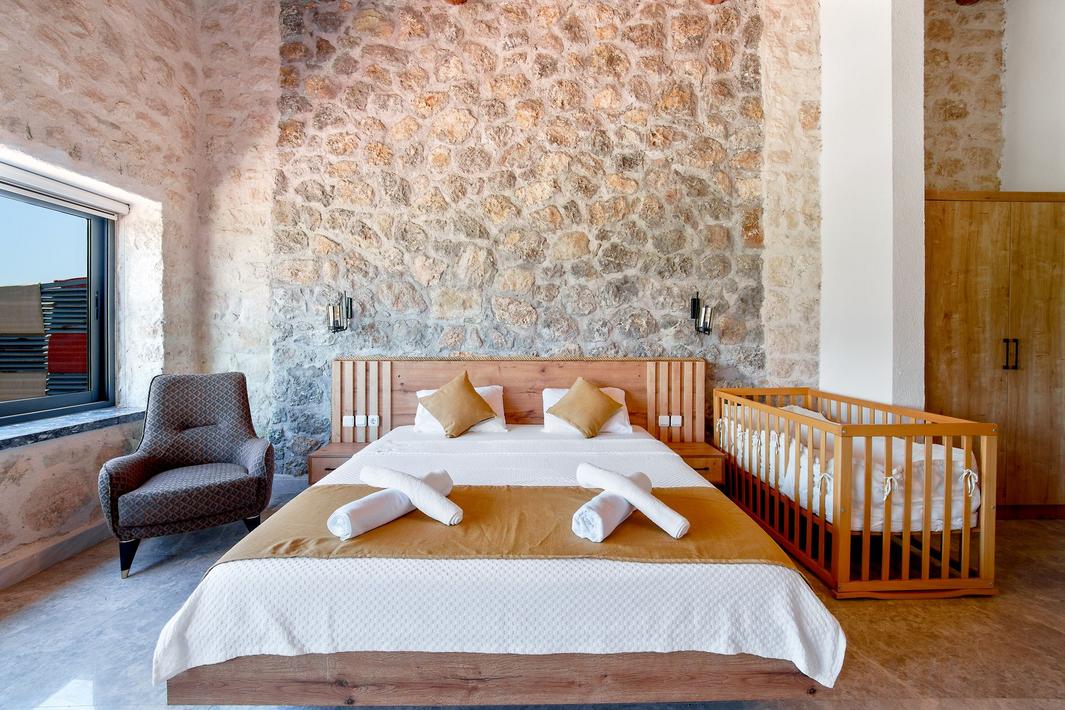
Family Hotels Are Competing on More Than Kids’ Clubs
A hotel can have an impressive kids’ club and still be the wrong recommendation for a family. If the connecting rooms are only available on request, dinner starts after a toddler’s bedtime and grandparents face a long walk to breakfast, the headline attraction does not resolve the booking problem. It merely gives the brochure something cheerful to lead with.
The most commercially useful family hotel features are often less photogenic: a bedroom door that closes, a confirmed bed arrangement, somewhere to eat without committing everyone to a formal meal. For trade buyers, these details determine whether a property can be recommended confidently or requires a chain of emails before anyone can quote it.
This is not an argument for abandoning children’s activities. It is an argument for changing the order in which hotels develop and sell their family proposition. Without supplied research, a universal shift in family preferences would be too strong a claim. The practical commercial reading is narrower: room flexibility, food options and space for different generations can decide suitability before a kids’ club enters the conversation.
You’ll find on this page
- The kids’ club is an attraction, not a complete proposition
- Sell the sleeping arrangement, not just the room category
- Food flexibility is about timing and control, not nuggets
- Multi-generational space must allow people to separate
- The trade needs answers it can safely repeat
- Prioritise the features that remove booking obstacles
- Build the family proposition around a real booking
- Frequently asked questions
The kids’ club is an attraction, not a complete proposition
A kids’ club answers one question: what can children do while adults have some time to themselves? It does not answer where everyone sleeps, whether siblings qualify for the same sessions, how meals work or what happens when a child does not want to attend. A family holiday contains all of these questions, often simultaneously.
Consider parents travelling with a toddler and an older child. A programme aimed at school-age children may be excellent for one sibling and irrelevant to the other. If the younger child requires paid childcare, the family needs to understand the cost, availability and booking conditions before departure. Describing both services simply as children’s facilities hides a meaningful distinction.
Equally, some families want to spend the holiday together. They may value a shaded pool, an easy beach approach and a relaxed restaurant more than supervised activities. Treating club participation as the defining family benefit risks overlooking customers who need practical support rather than separation.
For a hotel sales director, the implication is straightforward: lead with the needs the property can reliably meet, then explain the activities that enrich the stay. A club remains valuable where its age ranges, opening periods, staffing arrangements and reservation requirements suit the party. Those operating details belong in the trade proposition, not in small print discovered after booking.
A useful positioning exercise is to remove the kids’ club from the sales presentation temporarily. Can the team still explain why the hotel works for a family? If the answer becomes vague, the property may have an activity-led marketing story rather than a convincing accommodation proposition. The strongest offer remains credible even on a day when nobody uses the club.
Sell the sleeping arrangement, not just the room category
Hotel room configuration is often the first hard constraint in a family booking. Occupancy alone is insufficient. A room that legally accommodates four people may place everyone in one sleeping space, use a sofa bed that restricts circulation or offer little privacy once children are asleep. None of those arrangements is automatically unsuitable, but each suits a different customer.
Trade partners need to distinguish between a large room, a suite with a separate bedroom, connecting rooms and adjoining rooms without an internal door. These are not interchangeable descriptions. A parent expecting an internal connection cannot necessarily accept two rooms next to each other, even if the total floor area and price are similar.
Flexible family accommodation therefore starts with precise inventory, not enthusiastic language. For every relevant category, provide actual bed types, separate sleeping areas, bathroom arrangements and occupancy rules by age. Explain whether a cot can be added alongside existing beds and whether doing so changes the usable space. Floor plans are particularly useful where photographs make the layout difficult to judge.
This is where supplier assets need to work as sales tools, not just attractive imagery. A clearly labelled layout can answer a buyer’s question more effectively than another photograph of cushions and a balcony.
The crucial distinction is between what is guaranteed and what is requested. If connecting rooms cannot be confirmed at booking, say so plainly. Where the operating system permits it, creating a separately bookable connected-room product may be more useful than promoting an upgrade. Buyers can then quote the accommodation the family actually needs, rather than sell a preferred arrangement that remains uncertain until arrival.
Food flexibility is about timing and control, not nuggets
Family-friendly food options are frequently reduced to a children’s menu. That is too narrow. Families also need to know when food is available, how long a meal is likely to take, whether smaller portions are possible and what happens when members of the party want different things at different times.
A family arriving after an evening flight presents a useful test. The main restaurant may be closing, the children may need something simple and the adults may not want a full dinner. A clearly explained late-arrival option can matter more at that moment than the breadth of the buffet. If the only alternative carries an additional charge, the trade partner needs to know before recommending the board basis.
Meal plans need similar precision. Explain which outlets are included, whether reservations are necessary, how children’s age bands affect charges and whether snacks or drinks sit outside the package. A premium restaurant credit is less useful to a family if the venue’s serving times or atmosphere do not suit their children.
Dietary requirements deserve particular care. Suppliers should describe their actual procedures and limitations rather than promise unrestricted accommodation of every allergy. An agent needs a reliable route for checking requirements with the hotel, including whether a request is confirmed or still awaiting review. Reassuring language is no substitute for operational clarity.
Flexibility need not mean creating a separate menu for every guest. Earlier dining, straightforward dishes, transparent takeaway rules and reliable access to drinking water can improve the practical proposition. These details also help grandparents and other adults with different appetites or routines. The commercial objective is to make meals easier to organise without asking families to negotiate ordinary needs repeatedly during their holiday.
Multi-generational space must allow people to separate
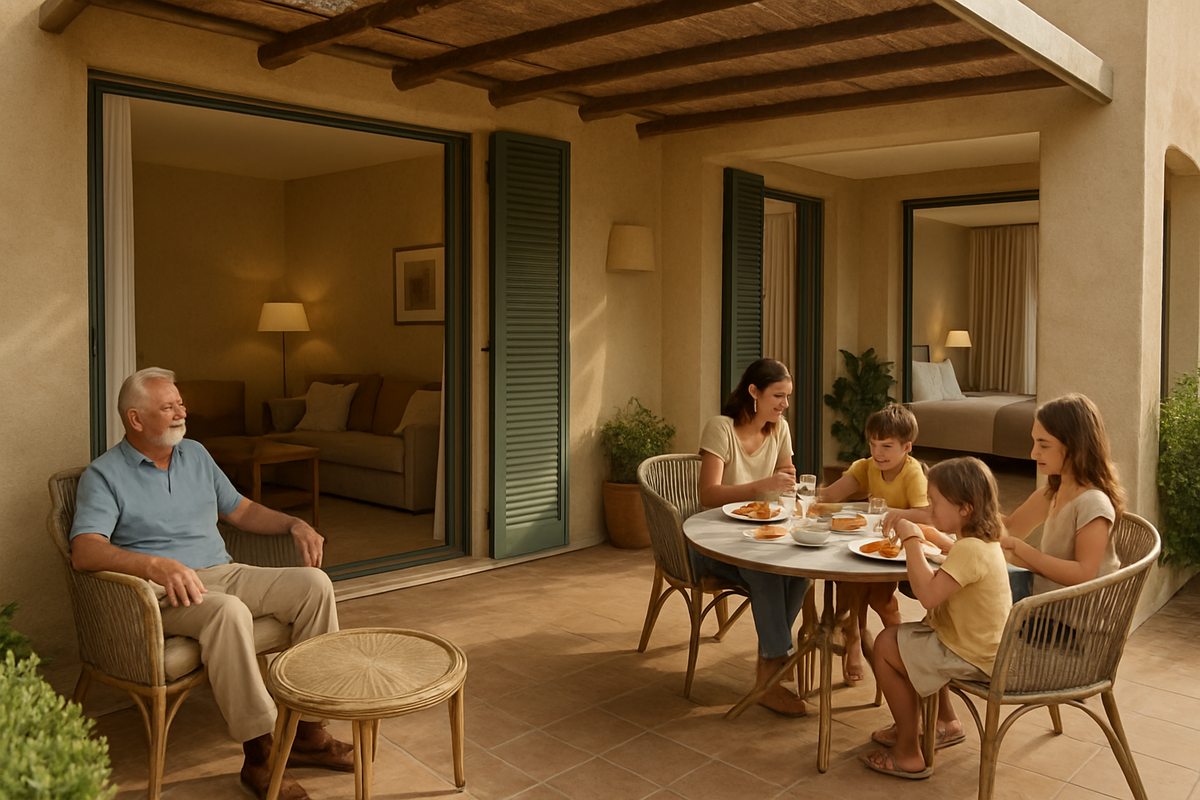
Multi-generational travel is often sold through photographs of everyone gathered around one table. Togetherness is part of the appeal, but a workable holiday also needs room for different routines. Grandparents may want a quiet morning, teenagers somewhere to spend time independently and parents a place to sit after younger children have gone to bed.
The most useful shared space is not necessarily the largest. It is space that different members of the party can reach and use comfortably. A lounge close to the bedrooms, a shaded terrace or seating beside a shallow pool may work better than a spectacular communal area reached by several flights of steps.
Room location matters alongside room type. A family group spread across distant buildings may have booked suitable accommodation individually but still struggle collectively. Hotels should explain whether nearby rooms can be guaranteed, what lift access exists and how room clusters relate to restaurants, pools and transport pick-up points. Avoid treating every grandparent as mobility-impaired; ask about actual needs rather than age-based assumptions.
DMCs can bring these details into a wider itinerary. A property that works well for a three-night beach stay might be awkward as a base for repeated early departures. Equally, a comfortable hotel cannot compensate for excursions that require everyone to follow the same pace. As with itineraries that reward suppliers for thinking beyond their own stop, the whole journey needs to fit the travelling party.
There is a useful pricing question here too: who needs which space? One large villa may seem the obvious solution, but separate bedrooms, bathrooms and living areas can matter more than having everyone under one roof. The trade should compare functional arrangements, not assume that the most communal option is automatically the best family product.
The trade needs answers it can safely repeat
A hotel can deliver a good family stay and still be difficult for the trade to sell. The problem is often not the product but the uncertainty around it. When each enquiry requires clarification from reservations, food and beverage and the children’s activity team, the buyer inherits the job of assembling the proposition.
A concise family product sheet should make the essential answers easy to retrieve. It should distinguish guaranteed features from requests and seasonal services from year-round provision. It should also identify who can resolve exceptions. The objective is not to remove every conversation; it is to stop routine questions becoming bespoke investigations.
- Which room arrangements can be confirmed, and for which combinations of adults and children?
- What are the dining times, inclusions and alternatives for late arrivals?
- Which children’s services require advance booking, extra payment or parental attendance?
- Can related bookings be linked, and what does that actually guarantee?
- Which facilities or routes have access limitations that buyers need to discuss?
These answers must remain consistent across rate sheets, booking channels and sales presentations. If one document describes a guaranteed connection while another says subject to availability, an agent cannot know which promise is safe to make. Agreeing a single operationally approved description is a commercial task, not merely an editing exercise.
For UK trade partners packaging accommodation with flights and transfers, detail matters particularly where fixed arrival times or school-holiday departures limit alternatives. The hotel is part of a promise made before the customer travels. The broader issue of matching holiday expectations with what suppliers can deliver becomes very concrete when a family arrives expecting a separate bedroom that does not exist.
Sales confidence comes from specificity. A modest hotel with clear answers can be easier to recommend than a more elaborate resort whose basic arrangements remain ambiguous.
Prioritise the features that remove booking obstacles
Not every hotel can build family suites, extend restaurant hours or add a second pool. The useful response is not to imitate a large resort. It is to identify which constraints prevent suitable families from booking, then separate problems that require investment from those that require clearer selling or better coordination.
Review family enquiries that did not convert. Record the practical reason where it is known: unavailable connecting rooms, unclear sleeping arrangements, a board basis that did not fit, unsuitable access or an unconfirmed dietary request. Do not automatically label every lost booking as price resistance. A customer may be unwilling to pay because the proposed arrangement does not solve the problem.
Next, test whether existing inventory can be packaged more coherently. Two room types might form a useful family combination, provided the connection can be guaranteed and the combined rate is commercially workable. An existing early restaurant opening might become a stronger selling point simply by being documented properly. Neither change needs a new branded programme.
There are limits. Holding connected-room combinations for family sales can restrict inventory flexibility, while extended food service creates staffing and operating costs. Product managers and hotel revenue teams need to agree release conditions, cancellation terms and pricing that reflect those commitments. A feature is not commercially sustainable merely because guests like it.
Tourism boards can support this work by organising family product information around suitability rather than collecting generic family-friendly labels. That contributes to a destination that is easier for travel agents to sell: buyers can identify the right combinations of accommodation, transport and activities without starting from scratch.
The right investment is the one that resolves a recurring, identifiable obstacle for a viable customer segment. Another children’s attraction may be worthwhile, but it should compete for budget against less visible improvements that make the core stay bookable.
Build the family proposition around a real booking
The practical starting point is a booking test, not a new campaign. Choose several realistic parties: parents with a baby and an older child; a single parent travelling with two children; grandparents joining a family with teenagers. Give each a likely arrival time, length of stay, meal preference and budget. Then ask the sales team to produce an accurate, bookable recommendation.
Where the team hesitates, examine the reason. Is the information missing, the policy unclear or the product genuinely unsuitable? Each requires a different response. Better copy will not create a separate bedroom, and a refurbishment will not fix conflicting occupancy information in the booking system.
Use the answers to define who the property serves well and where it should be cautious. A hotel does not need to suit every family to build a strong trade position. It needs to serve its chosen families reliably, explain the proposition clearly and avoid promising flexibility that operations cannot provide.
For Globalisto, the commercial lesson is that representation works best when the underlying offer can withstand a buyer’s detailed questions. Keep the kids’ club in the story, but stop asking it to carry the entire sale. The stronger family proposition makes sleeping, eating and spending time together easier to arrange before anyone reaches the resort.
Frequently asked questions
Which family hotel features should travel agents check first?
Start with confirmed sleeping arrangements, occupancy rules, dining flexibility and the location of rooms within the property. Then check whether children’s activities suit the ages and preferences of the travelling party. A strong kids’ club cannot compensate for accommodation that does not fit.
Are connecting rooms the same as adjoining rooms?
Connecting rooms have an internal door between them, while adjoining rooms may simply be next to each other. Buyers should verify the hotel’s terminology and whether the arrangement is guaranteed at booking. The distinction is particularly important when young children would otherwise sleep in a separate room.
What makes a hotel suitable for multi-generational travel?
Suitable properties offer a workable combination of private sleeping space, accessible shared areas and options for different daily routines. Room proximity, bathroom arrangements and distances to restaurants can all affect suitability. Ask about the group’s needs rather than assuming that every multi-generational party wants the same arrangement.
What should hotels explain about family-friendly food options?
Hotels should specify meal times, included outlets, children’s charging rules and options for arrivals outside normal service hours. They should also explain how dietary requirements are reviewed and confirmed. Clear limitations are more useful to a buyer than broad promises that operations may not be able to fulfil.
Can a hotel sell successfully to families without a kids’ club?
Yes, where the accommodation, food, location and activities suit the families it targets. Some parties prefer shared experiences rather than supervised childcare. The hotel should be explicit about what it offers and avoid implying that facilities or services exist when they do not.