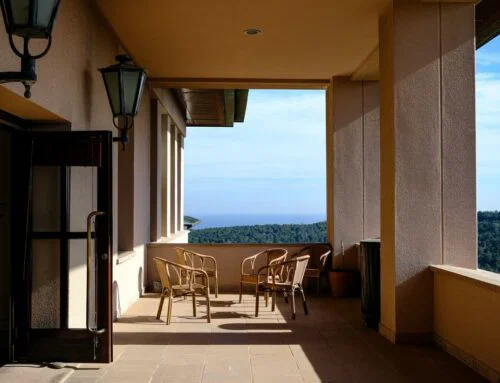
Space and Privacy Are Becoming Part of the Product
A hotel sells a larger suite, but its guests still compete for breakfast tables and pool loungers. A DMC sells a private tour, but the vehicle arrives at the same crowded viewpoint as every coach. Both products offer something valuable. Neither necessarily delivers the space or privacy the customer thought they were buying.
That gap matters commercially. Space, privacy and fewer encounters with crowds deserve to be treated as explicit travel product features, not left inside a loosely defined promise of luxury. This is not a claim that every traveller wants isolation, or that every quiet corner warrants a surcharge. It is an argument that suppliers often possess valuable differences they have neither defined properly nor made easy for the trade to sell.
For hotel sales directors, DMC owners and tour operator product managers, the task is to separate those differences, establish what can genuinely be promised and attach a workable price. A bigger room, an exclusive departure and a less congested itinerary solve different problems. Selling them as interchangeable versions of exclusivity leaves both revenue and customer expectations exposed.
You’ll find on this page
- Space, privacy and quiet are different products
- The strongest proposition starts with the customer’s friction
- Price the capacity you surrender, not just the extras
- A premium is only sellable when the trade can book it
- Sell less crowd exposure without promising an empty destination
- Prove the difference before asking buyers to pay for it
- Start with one defensible promise, then test its value
- Frequently asked questions
Space, privacy and quiet are different products
Start by abandoning the assumption that these benefits come as a package. Space is about physical room: bedroom area, seating, distance between tables or the number of passengers sharing a vehicle. Privacy concerns access and visibility: who can enter, who can overlook a terrace, whether facilities are shared. Quiet is different again. A secluded villa can sit beneath a flight path; a spacious hotel can host a lively evening programme.
Reduced crowd exposure is another distinct benefit. A privately guided visit to a major attraction may still involve queues and busy galleries. Conversely, a shared excursion at a carefully selected time may offer a calmer experience than a private departure at peak visiting hours. Buyers need those distinctions before they can match a product to a client.
Consider a couple choosing between two room categories. One offers more indoor floor space; the other has a smaller bedroom but an enclosed courtyard. The courtyard may command the stronger premium for customers seeking privacy, while the larger room suits guests spending substantial time indoors. Calling both options spacious luxury obscures the actual decision.
Suppliers should therefore describe the unit of value rather than reach immediately for an adjective. State usable room dimensions, terrace screening, shared access arrangements and the maximum number of participants. Clarify whether an exclusive vehicle also means an exclusive guide. These details are not dull supporting information. They are the evidence that allows an agent to recommend a higher-priced option without relying on atmosphere alone.
The strongest proposition starts with the customer’s friction
Luxury travel demand is an obvious lens for this discussion, but not a sufficient one. A family may pay for separate sleeping areas because incompatible bedtimes make one room impractical. Friends may choose exclusive vehicle use to avoid negotiating daily departure times with strangers. A traveller with sensory sensitivities may value a predictable, less busy setting more than elaborate service.
These are different purchasing motivations, not one premium customer segment. The commercial question is what inconvenience, uncertainty or compromise the additional space removes. That answer usually produces a sharper sales proposition than a general promise of indulgence.
A hotel selling connecting rooms, for example, needs to explain whether the connection is guaranteed, when it is confirmed and how the configuration works. An attractive family rate cannot compensate for uncertainty about where children will sleep. The same principle underpins family hotel features that matter to trade buyers: operational details become selling points when they resolve a real booking concern.
DMCs can apply the same thinking to private travel experiences. A private transfer may sell on avoiding a shared collection route rather than on the prestige of the car. A dedicated guide may be valuable because the party can pause, change pace or spend longer on a particular interest, subject to the itinerary’s constraints.
Do not turn every preference into a claim about a universal trend. Instead, examine enquiry language, upgrade requests, lost bookings and recurring complaints. If customers repeatedly ask whether a pool is shared or a departure is guaranteed private, the supplier has a concrete product question to answer. That is a better starting point for development than assuming that everyone wants a villa.
Price the capacity you surrender, not just the extras
Travel supplier pricing becomes more demanding when the benefit being sold is the absence of other customers. An exclusive departure can remove seats from general sale. A private dining area may require space that could otherwise serve several parties. Extending a gap between excursions may reduce the number of departures a guide or vehicle can operate.
The price must reflect that trade-off, alongside direct costs. Simply adding a modest private supplement to a shared excursion can look appealing until the supplier discovers that a small private booking has displaced a commercially stronger departure. Equally, pricing every exclusive service as though all available places would certainly have sold can make a useful product uncompetitive.
A practical approach is to distinguish operating cost, capacity commitment and customer value. Establish what delivery costs, what inventory is being withheld and what flexibility or reassurance the customer receives. Then consider how those factors change by date, booking lead time and demand conditions. Private use during a lightly booked period need not carry the same commercial terms as exclusive access at a constrained peak time.
Different structures suit different products. A private vehicle often needs a per-party price with a stated passenger limit. A hotel buyout needs clear inclusions, minimum commitments and rules for external visitors. A room upgrade can remain per room, but its distinctive benefit must survive changes in occupancy.
Avoid making every moment of peace a paid extra. If a hotel has sold a restful stay, basic protection from avoidable disturbance belongs in the core promise. Charge for a meaningful additional entitlement, such as a genuinely exclusive facility or guaranteed configuration, rather than charging guests to escape a weakness in the standard product.
A premium is only sellable when the trade can book it

A tour operator cannot confidently package a benefit that exists only in a sales presentation. If the brochure promises a private terrace but the booking system displays an ambiguous room code, the agent has to request clarification. If that clarification takes several exchanges, an apparently distinctive product becomes expensive to sell.
Each feature needs a bookable identity. That might be a specific room category, a private departure code or an optional exclusive-use supplement. The contract should identify what is guaranteed, what remains on request and what happens when the original arrangement cannot be delivered. A buyer should not need to reconstruct the promise from separate emails.
For UK trade partners, prices and terms also need to work within their own distribution arrangements. State whether a supplement is net or commissionable, whether it applies per person or per party, and how children affect occupancy. Explain cancellation conditions where private access requires advance commitments to guides, venues or transport providers.
These are the same practical barriers that cause excellent local tours to struggle with trade contracts. An appealing experience is not automatically a distributable product. The buyer needs a reliable way to quote it, reserve it and explain it to colleagues who have never visited.
Give reservations teams a short operational specification alongside the sales description. It should cover inclusions, exclusions, capacity, confirmation timing and any restrictions. For an exclusive boat departure, for instance, specify whether catering staff remain aboard and whether the itinerary depends on sea conditions. Precision does not weaken the premium. It protects the buyer’s ability to sell it honestly.
Sell less crowd exposure without promising an empty destination
Crowd-free tourism is an attractive phrase and a hazardous guarantee. A supplier rarely controls public streets, flight arrivals, cruise calls or access policies at a popular monument. Even a carefully planned early visit can coincide with another group’s carefully planned early visit. Selling certainty where the supplier only has influence invites complaints.
The better proposition identifies the mechanism. A DMC might offer timed admission, a route that avoids the busiest entrance, visits outside the usual excursion window or accommodation within walking distance of an attraction. Each can reduce friction. None should be presented as a promise that the destination will be empty.
There are also trade-offs to disclose. An earlier start means less time at breakfast. A quieter base may involve longer journeys to restaurants. Travelling outside a destination’s busiest period can mean different weather, reduced services or shorter opening hours. A good product manager weighs those compromises instead of treating low visitor density as an unqualified benefit.
Tourism boards have a useful role here, but dispersal needs more substance than promoting an undiscovered alternative. Trade teams need to know whether the alternative has suitable guides, toilets, transport access, bookable activities and sufficient accommodation. Moving demand towards a place that cannot comfortably receive it is not a durable solution.
The strongest message combines attraction with practical reassurance, much as destination marketing must address booking concerns as well as inspire. Explain what the visitor gains, how the journey works and where uncertainty remains. Suppliers can sell better timing and thoughtful routing without claiming ownership of the public realm. That is a more credible proposition than promising solitude at a landmark everybody recognises.
Prove the difference before asking buyers to pay for it
Space is particularly easy to misrepresent through imagery, even unintentionally. A wide-angle photograph can make a compact terrace appear generous. An empty pool at sunrise says little about its atmosphere during a busy afternoon. A beautifully cropped garden image may conceal a neighbouring walkway that materially changes the sense of privacy.
Trade assets should answer the questions the premium creates. Include floor plans, accurate dimensions, terrace orientation and representative views. Explain whether photographs show a particular unit or a category with variations. Where screening is seasonal, or a room’s outlook depends on allocation, make that visible before confirmation.
This is where useful supplier sales assets differ from merely beautiful ones. Agents need material that helps them qualify suitability, not just generate desire. A simple plan showing separate bedrooms and shared living space may help close a booking more effectively than another photograph of a sunset.
Familiarisation visits should test the proposition under realistic conditions. If the hotel sells generous shared space, buyers should understand how breakfast, the pool and transfers operate when occupancy is higher. If a DMC sells a calmer itinerary, the visit should demonstrate the routing decisions and their compromises, not rely on exceptional arrangements that paying clients will never receive.
Operations must then preserve what sales has sold. Record exclusive-use entitlements where staff can see them. Set escalation procedures for a substituted vehicle, unavailable connecting room or unexpected event beside a quiet accommodation area. The point is not to promise that disruption never happens. It is to ensure that everyone recognises which part of the product the disruption has removed, and can respond accordingly.
Start with one defensible promise, then test its value
The practical starting point is not a new collection labelled private luxury. It is an audit of what the supplier already controls. Identify where guests gain more room, exclusive access, fewer shared movements or greater control over their day. Then separate genuine entitlements from conditions that merely happen to be favourable sometimes.
Choose one feature with a clear customer use case and a delivery model operations can support. Define its boundaries, build the correct price structure and give trade partners the information needed to quote it. Test the proposition with buyers who serve the relevant customers, rather than circulating it indiscriminately to every account.
Review the commercial result beyond the headline supplement. Did the feature help secure a booking, produce a sustainable margin or remove a recurring objection? Did it displace other business? Did reservations spend disproportionate time explaining it? Guest feedback should establish whether the promised difference was noticeable, not merely whether the stay was enjoyable.
For Globalisto, the important distinction is between possessing an appealing attribute and presenting a product the trade can confidently sell. Space and privacy can support additional revenue, but only when the promise is specific, the price respects capacity and delivery remains consistent. The opportunity is not to rename existing inventory. It is to make a valued difference understandable, bookable and worth paying for.
Frequently asked questions
What travel product features communicate space and privacy?
Useful features include usable room dimensions, separate living areas, screened terraces, exclusive vehicle use and guaranteed private departures. Specify access arrangements and sharing conditions rather than relying on terms such as secluded or exclusive.
How should suppliers price private travel experiences?
Consider delivery costs, the capacity withheld from other customers and the value of the additional entitlement. Use a pricing unit that suits the product, such as per party for an exclusive vehicle, and make passenger limits and inclusions clear.
Can tour operators guarantee crowd-free sightseeing?
Generally, they should not guarantee the absence of crowds in places they do not control. They can describe specific measures such as timed entry, alternative routes or carefully chosen visiting times, while explaining the limits of those arrangements.
Are space and privacy only relevant to luxury travellers?
No. Families may need separate sleeping areas, while other travellers may value flexible departure times or fewer shared facilities. The relevant question is which practical problem the feature solves and whether the customer values that solution.
What information do trade buyers need to sell privacy upgrades?
Buyers need a clear product description, bookable category or supplement, accurate imagery and explicit guarantees. They also need pricing, commission arrangements where applicable, confirmation procedures and terms covering substitutions or unavailable facilities.